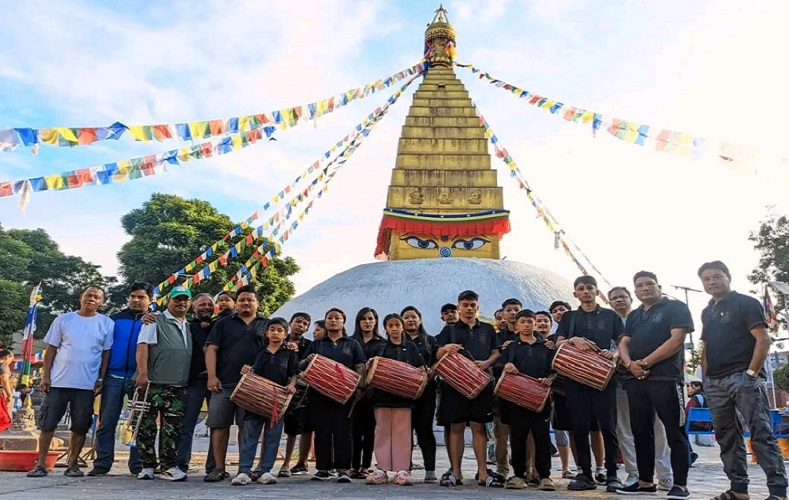

The Gula Dharma festival has started today, predominantly celebrated by the Newar Buddhist community. Followers of the three Buddhist traditions—Hinayana, Mahayana, and Vajrayana—observe this month-long festival to express their devotion to Lord Buddha.
The festival spans from the first day of the bright fortnight in the month of Saun to the first day of the bright fortnight in Bhadra. During this period, devotees engage in religious activities reflecting their faith in Buddhism. This time frame is considered sacred as it marks the month when Shakyamuni Gautam Buddha attained enlightenment.
In Kathmandu, devotees begin by circumambulating the Swayambhu Mahachaitya, followed by the traditional parikrama (circumambulation) of sites such as Shobhavagwati, Vijayashwari, and Seto Matsyanarayan in Kel Tol.
The term ‘Gula’ comes from the Newar language where ‘Gū’ means ‘nine’ and ‘la’ means ‘month,’ signifying the festival’s celebration on the ninth month’s Paru tithi of the Nepal Sambat calendar.
Every morning, the festival commences with playing the Gula Bāja (traditional musical instruments) as devotees circumambulate Buddhist chaityas, temples, and viharas alongside Swayambhu Mahachaitya.
The traditional instruments kept at Sithi Nakha are brought out on Gathemangal day to mark the beginning of the Gula festival.
The Newar Gopalis perform rituals by worshipping water sources and opening springs, wells, and water channels that have been blocked during the monsoon season, ensuring the flow of fresh water for the community during the festival.