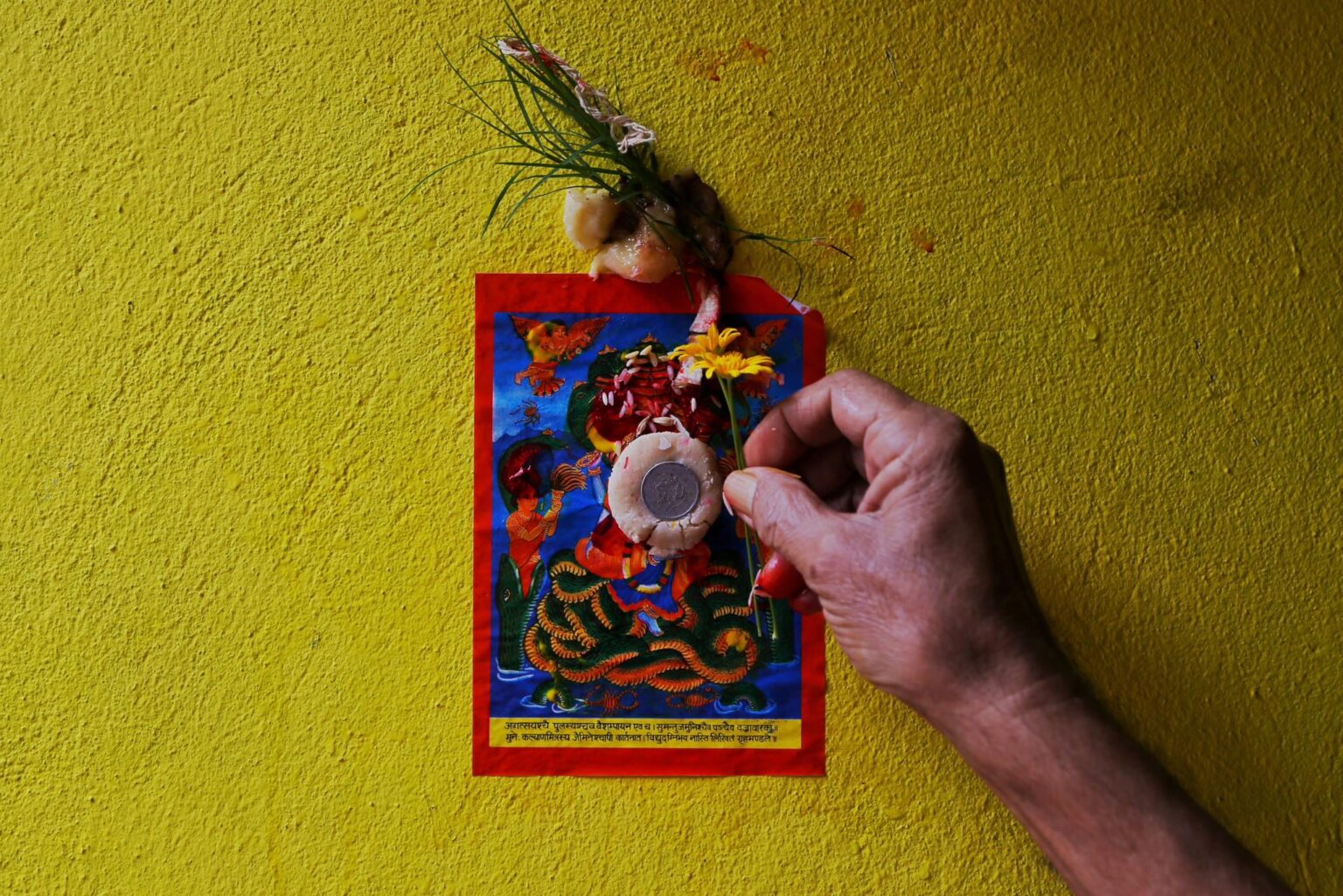

Nag Panchami, a Hindu festival dedicated to the worship of serpents, is being observed across Nepal today by performing rituals and placing images of snakes on the main entrance of homes, in accordance with tradition. The festival is celebrated every year on the fifth day of the bright fortnight (Shukla Panchami) in the month of Shrawan.
It is believed that by affixing the image of a serpent on the doorway and performing worship, households are protected for the entire year from the dangers posed by snakes, scorpions, and other harmful creatures. Additionally, it is thought to shield against fire, storms, and lightning.
The practice of snake worship dates back to Vedic times. In Vedic beliefs, serpents—particularly Nagas—are considered the “kings” of snakes. Since angering Nagas was thought to bring drought and water scarcity, worshipping them was seen as a way to ensure rainfall and water abundance. According to the Varaha Purana, a sacred text, a significant conversation took place between Lord Brahma and the serpent king on this very day, making it especially auspicious for snake worship.
On this occasion, special prayers and offerings are made at sacred ponds and snake shrines such as Nagpokhari and Taudaha in Kathmandu, Siddhapokhari in Bhaktapur, and various other Nagdaha and kunds across the country. Offerings typically include cow milk, rice grains (akshata), sacred grass (dubo), rice pudding (kheer), and flatbread (roti).
Nag Panchami also marks the beginning of the festival season for followers of the Vedic Sanatan Hindu tradition.